
Cuyahoga 72-Hour Release Access
The Cuyahoga County Sheriff does not advertise a page, app filter, or browser search labeled “released in the last 72 hours.” Its official inmate-information page points to a mobile app with daily jail rosters. That is a snapshot of current custody, not a rolling archive of who departed over three days. The county also publishes no supported three-day retention period for records that leave the app.
A true three-day answer comes from records with a date and custody event. Ask the Sheriff for existing release-log or booking-movement entries covering the exact start and end dates. Then check the legal authority and destination. A Common Pleas or municipal docket may explain bond, dismissal, sentence, or conveyance. ODRC can confirm state-prison custody after a transfer. VINE can provide a participating-agency event, though it is not a certified release record.
Check Cuyahoga Three-Day Releases
Set the window before contacting an agency. Use full calendar dates and, when a boundary matters, state the beginning and ending times. A narrow request is easier to route than “everyone released recently.” If the goal is one person’s chronology, include the full name, spelling variants, date of birth or approximate age, booking or case number, and arresting agency when known.
- Check the Sheriff daily-roster access for present CCCC custody. Save the date and time of the check.
- Call the Sheriff Release Desk at 216-443-6150 for a named county booking. Ask for the exact reported status and when it was entered.
- Use the Common Pleas criminal docket for county felony matters or the correct municipal court for a city case. Read journal entries across the full range.
- Check ODRC if a state conveyance is possible and Ohio VINELink for a participating custody event.
- Use the county public-record portal to request the existing Sheriff release or movement records for the three-day period.
For a municipal jail, replace the Sheriff Release Desk with the city that controlled the booking. Parma, Strongsville, and Solon have their own detention paths. A person transferred from a city jail to CCCC has changed custodians, not necessarily left custody.
Euclid and Bedford Heights need added care because their documented roles can include county satellite functions. A move between a satellite and the downtown jail is an internal movement. It is not a release. Bedford Heights also has a municipal detention role, so the booking authority decides whether the Sheriff, the city, or a municipal court holds the useful record. Ask who accepted custody and follow that agency’s record trail.
Note: Record each source, access time, and exact event wording so that later updates do not erase the three-day chronology.
Cuyahoga 72-Hour Release Fields
No public feed supplies a confirmed field set. Instead, request fields that identify the booking, departure, authority, and destination. The Sheriff may retain the facts in a jail card, movement history, commitment or release record, or daily activity log. The custodian decides which record series applies and which portions are releasable.
| Requested field | Three-day use |
|---|---|
| Booked name and identifier | Separates one custody episode from another and reduces mistaken matches. |
| Booking date and time | Shows whether the jail stay began before or within the selected range. |
| Release date and time | Places the recorded departure within the 72-hour window. |
| Release type or code | Distinguishes bond, time served, dismissal, transfer, and other recorded outcomes. |
| Court or releasing authority | Points to the docket entry that supplied the legal basis. |
| Transfer or destination agency | Prevents a handoff to another custodian from being called community release. |
If abbreviations appear, ask for the code key or data dictionary. Do not guess. A release time entered by the jail may differ from the date a judge signed an order, the time a bond was posted, or the moment the person physically departed.
Cuyahoga Weekend Release Records
A 72-hour range is most useful when a same-day check would split related events across dates. A Friday court order can precede later jail processing. A weekend transfer may not be clear from a single roster view. The broader range lets the researcher align the order, release entry, VINE event, and receiving record without assuming they occurred at once.
There is no official Cuyahoga claim that processing pauses on weekends or holidays, and no published rule promises when an app change will appear. The Sheriff’s 6:00 a.m. to 6:00 p.m. prisoner pickup and drop-off window is not a three-day feed schedule or a release deadline. Ask the Release Desk about the named booking and request a dated record when the sequence matters.
For the most recent day only, the Cuyahoga County 24-Hour Release List narrows the workflow to same-day confirmation. Use the three-day method when the event crosses a weekend or when the first check occurred after the roster had already changed.
Note: Weekend timing is a reason to widen the date range, not a basis for assuming that release processing was delayed.
Cuyahoga Release Desk Confirmation
The Clerk tells people to call the Sheriff Release Desk after bond is posted. This is important because bond approval sends notice to the jail but does not prove that all release checks are complete. Another case, warrant, or hold can affect what happens next.
The Cuyahoga County Clerk FAQ displays the official Release Desk direction and number:
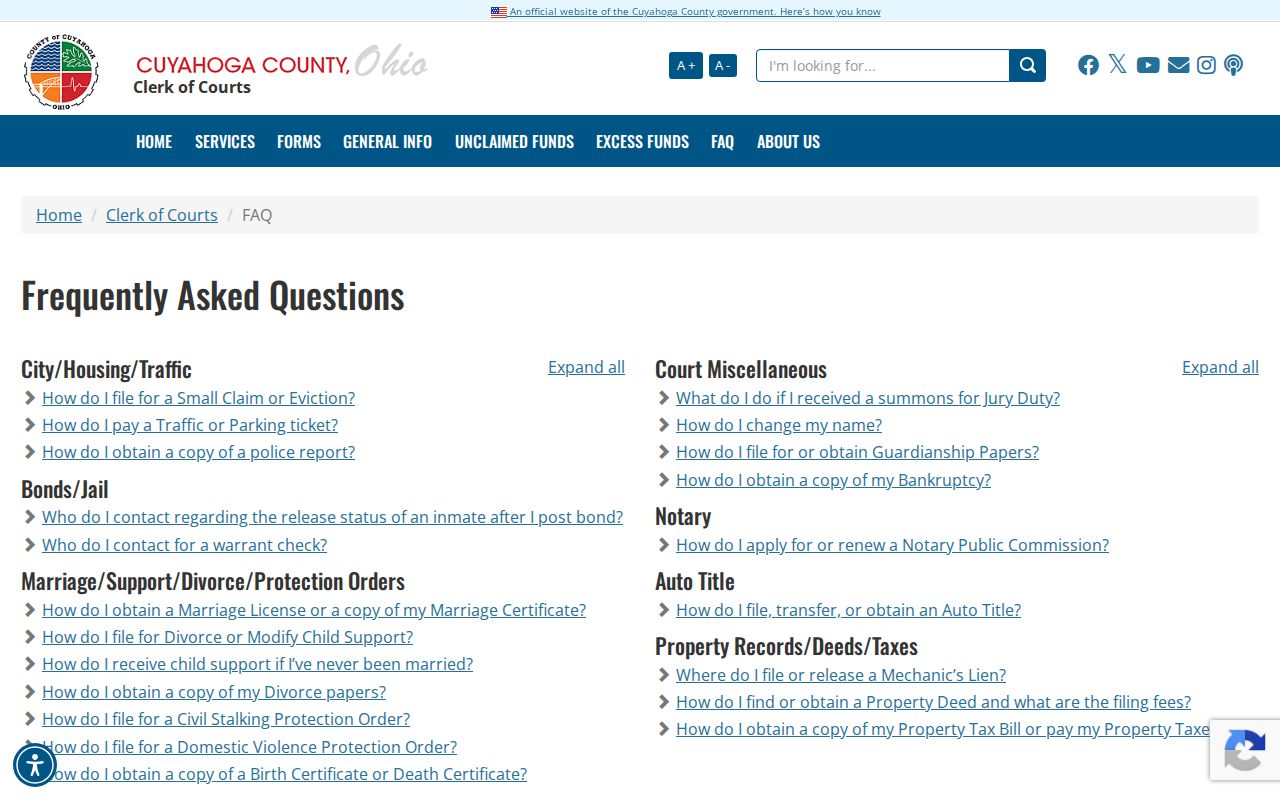
The captured answer supports a named-person confirmation call. It does not create a public list of every departure in the 72-hour period, so the dated record request remains the archival route.
Cuyahoga App Has No Archive
Cuyahoga’s app-only roster design is the key local data quirk. The official county page says “daily jail rosters,” while the access sweep found no released-only view, no 24-hour or 72-hour filter, no release persistence period, and no historical archive. The current app may still help test whether a person appears in county custody at the moment of review.
Do not infer fields that the county has not documented. The source does not promise a booking number, charge, bond, photo, custody location, or release label in every version. Generic app push notifications also are not the same as a person-specific custody alert. For future change notices, register through VINE while the matching record is in custody.
The research located a 2019 county retention schedule that listed a five-year series for daily jail activity logs. That finding does not prove that every requested release fact belongs to that series or remains open in the same form today. Name the existing release or movement data sought, give exact dates, and let the records custodian identify the responsive series. Administrative retention can continue long after a record disappears from a public app.
Reconcile Cuyahoga Release Systems
Three days of records can include several types of departure. Bond, recognizance, time served, dismissal, and sentence completion may return someone to the community. A transfer to ODRC, another jail, a community-corrections placement, or another authority ends one jail’s custody without proving freedom from all custody or court control.
| Reported clue | Next source |
|---|---|
| Name remains on daily roster | Sheriff or controlling city jail for present custody. |
| Name drops off county roster | Release Desk, court docket, and dated movement record. |
| Docket says “convey” or prison term | ODRC offender record for statewide custody or supervision. |
| VINE reports transfer | Agency named in the event and the receiving custody system. |
| Federal or immigration hold suspected | BOP or ICE system, not the county roster alone. |
For one named person, the Cuyahoga County released inmate search explains the full current and historical path. Keep the custody systems separate. The county jail does not maintain the ODRC prison record, and a state record does not replace the Sheriff’s local release entry.
The court record and jail record also answer different parts of the event. A judge’s entry can set bond, dismiss a charge, award jail-time credit, impose sentence, recall a capias, or order conveyance. It may not show the hour when jail processing ended or disclose another agency’s hold. Match the court entry to the Sheriff movement record by case and booking details before assigning a release reason.
If the departure was into the Judge Nancy R. McDonnell Community Based Correctional Facility, the person entered a structured community-corrections program. Successful completion returns the participant to County Probation supervision. That path is neither an ODRC prison discharge nor an ordinary Sheriff roster release. The CBCF, court, and probation records form the right three-day chain.
Note: A three-day release record is strongest when the jail event, legal authority, and receiving agency all describe the same person.